
When Dr. Kelly and I were planning the Great Australian Expedition of April-May 2025, one idea which came up early on was to include a side trip to southeast Asia. I’ve always wanted to visit Angkor Wat, and while Cambodia isn’t exactly close to Australia, it’s a lot closer to Australia than it is to Massachusetts, so this seemed like my best chance.
Getting from Adelaide to Siem Reap (the modern city where the Angkor Wat temple complex is located) required a layover to change airlines along the way, and our choice was either Singapore or Bangkok. I conferred with a cousin who has worked in the region which was a better place to visit, and his response was “Bangkok, hands down.” So we decided to add a few days in Bangkok as well.
And Bangkok is just down the road from the ruined city of Ayutthaya, the former capital of Siam, so maybe a couple of days there would be nice. And Thailand has national parks with wild elephant herds, so maybe we should add some extra time for that.
Meanwhile we were also lengthening the list of places we wanted to go in Australia, and all of this had to fit into a set period between April 20 and May 25 of 2025. Eventually we reluctantly agreed to drop the Indochina leg of the trip and concentrate on Australia exclusively. You can read about that journey here.
But we still wanted to visit Cambodia and Thailand. After some research and talks with people who have been there, we decided to take a tour. This is a first for us; all our other voyages have been on our own. I’ve driven cars in Britain and France, Diane drove halfway across Australia, we’ve navigated railroads and bus lines in Italy and Japan, and we even braved the unknown perils of Canada, where the doughnut chains are alien and disturbing.
Two things drove the decision to go on a tour. The first was simply that getting around in Indochina seemed harder than Europe or Japan. We’re both past fifty years old now, and the appeal of lugging a backpack onto a rural bus has dimmed. We can afford to let someone else worry about moving us around and making arrangements, so why not — especially in a region where a US dollar has enormous buying power?
The second reason came from one of the people I talked to about visiting the area. He went with a tour group and spoke fondly of the experience. While Diane and I get along well, three weeks in countries where we don’t speak the language seemed a little lonely. A group would provide some companionship.
So we looked for tours that were going to the places we wanted to visit during the time period we could travel. That was determined by the University of Massachusetts’s academic schedule: we had to make the trip between December 20, 2025 and January 29, 2026 — and of course we wanted at least a week between our return and the start of classes.
We did find a good fit for Cambodia: Lost Plate Food Tours had an 8-day trip in Cambodia including Phnom Penh and Siem Reap, with a focus on local cuisine. Since local cuisine is about 50 percent of what Diane and I are interested in when we travel, that seemed like a perfect fit. (Spoiler alert: it was a perfect fit.)
For Thailand we wound up making arrangements with Audley Travel for a custom-curated tour. We told them what kind of things we were interested in, they found potential candidates, and we assembled a two-week tour.
When I travel I like to consult very old accounts of the places I’m going. Usually I rely on 19th-century Englishmen, because they went everywhere and wrote in my native language. But on this trip my long-departed guides were Chinese and French.
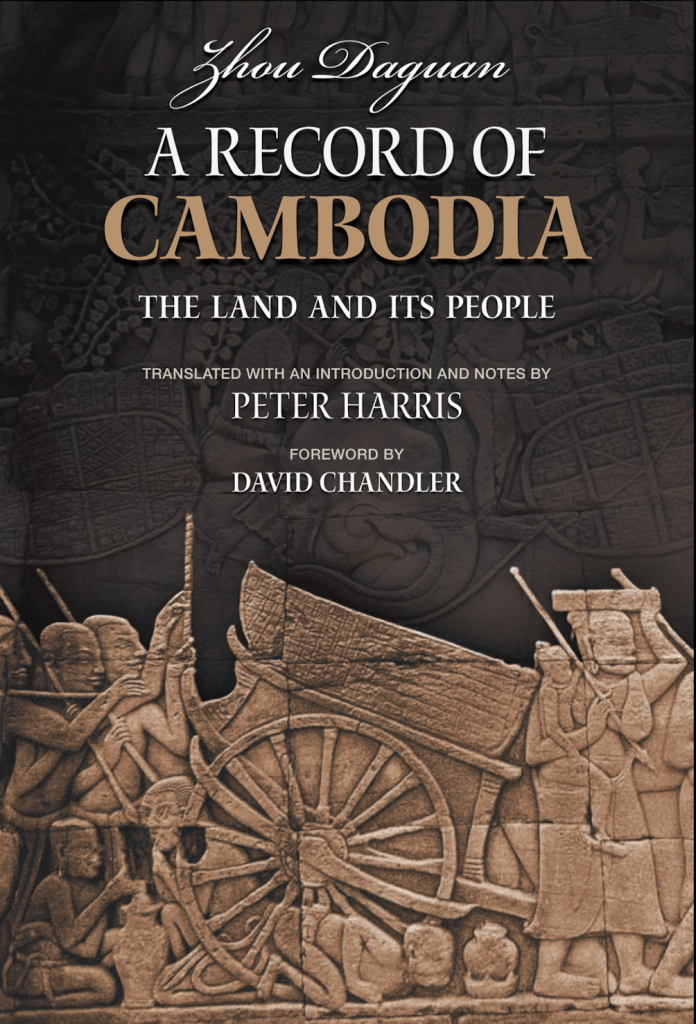
Zhou Daguan was a Chinese diplomat who accompanied a mission to Angkor in 1296. He was part of a group sent by the Mongol emperor Temur Khan to register the Great Khan’s displeasure over the treatment given to the previous envoys. Since the displeasure of Great Khans might involve leveling cities, Master Zhou and his companions were received very politely, and he spent nearly a year in Angkor, leaving the most complete description of that city and the Khmer Empire at its height. He was my authority for the Cambodia tour.
Henri Mouhot was a French naturalist who traveled to Bangkok in 1858 and used the city as his base for expeditions into Cambodia and Laos. He left a great account of Siam just at the dawn of its full-steam-ahead race to modernization, which is still roaring ahead. Mouhot also rediscovered Angkor, which had been mostly abandoned and reclaimed by jungle after the fall of the Khmer Empire, so he makes a nice complement to Zhou.
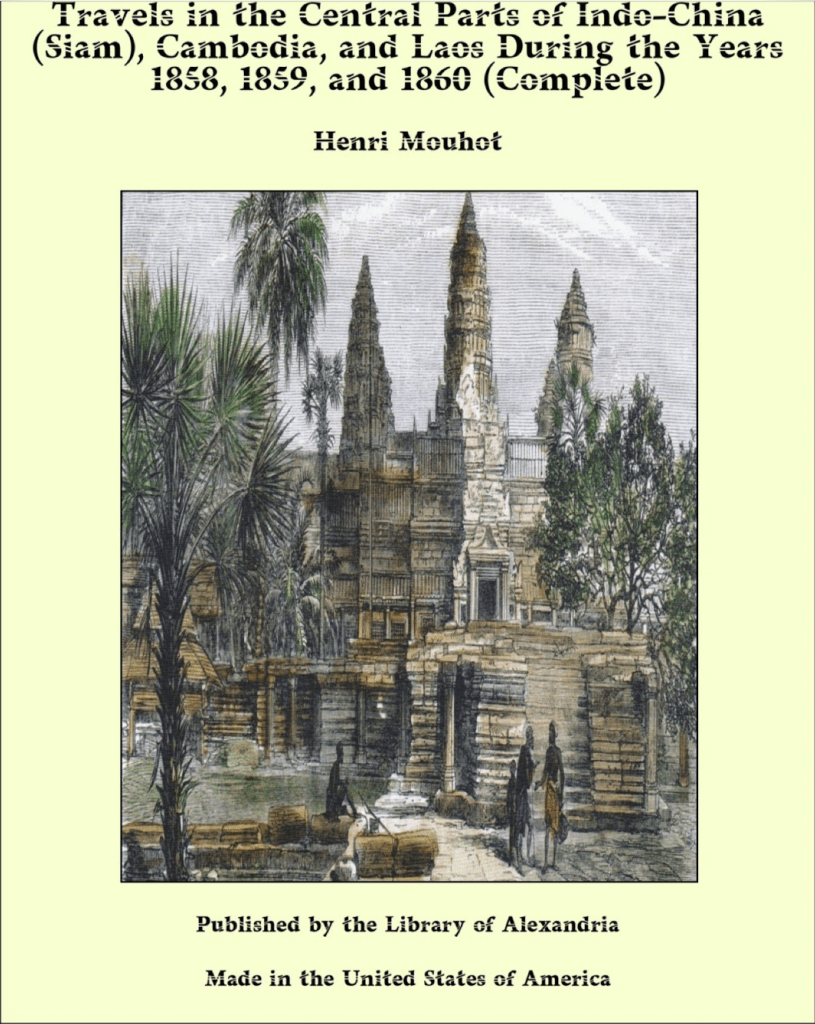
The rediscovery of Angkor had repercussions which caused us some anxiety in the weeks leading up to our trip. When the French learned there was a literal lost Wonder of the World in the jungles of northwest Cambodia, they responded by expanding their colonial claims to include that region. This came as unpleasant news to Siam, which had also claimed that region ever since they wrecked the Khmer Empire. But King Rama IV (aka Mongkut, the Yul Brynner guy) of Siam was far too shrewd to take on Napoleon III’s France, and eventually yielded with a lot of grumbling. The French colony of Cambodia became the basis of the modern kingdom of Cambodia (more on that later), but the government in Bangkok has never been satisfied with the arrangement.
This past summer border disputes turned into open war between the two countries. Fortunately it has been a fairly low-intensity war, but people did get killed and some stuff along the Thai-Cambodian border got blown up. A ceasefire in August seemed to resolve the situation, but fighting broke out again just a few weeks before our trip. We kept nervously checking the State Department’s advisories about whether it was safe to visit. Diane had the clever idea of consulting the Australian Department of Foreign Affairs as well, since Australia is closer and lots of Australians visit Indochina.
The Lost Plate tour did make some changes to the itinerary to avoid the conflict zone (we lost a stop in Battambang), but showed no signs of canceling, and commercial flights between Siem Reap and Bangkok were still operating, so in the end we shrugged and went ahead.
We spent Christmas Eve at the hotel in Bradley Internation Airport in Windsor Locks, then got up at 4 a.m. on Christmas Day to make our flight. The first leg took us from Connecticut to Detroit, where we got on a plane to Seoul. Detroit to Seoul is a long flight. I’m a tall person, and we were flying Economy class, with seats exactly as far apart as the length of my femur. Sleep proved impossible for me, so I read all of Master Zhou’s account of Angkor, a couple of novels I had downloaded onto my phone, and finally tackled the complete works of Shakespeare. I got through The Two Noble Kinsmen and Measure for Measure by the time we landed at Seoul.
Our layover in Korea was relatively brief as the plane had been a little delayed by weather. The Seoul airport is big, with a great many shops selling duty-free luxury goods. To be candid I’ve never understood that: when I’m travelling the last thing I want is to burden myself with more stuff to carry, especially stuff that’s expensive and/or fragile. If you’re buying Prada goods or Glenfiddich scotch, does it really matter all that much if you save a few bucks by getting it at the airport?
Boarded our Korean Airlines flight for the trip to Phnom Penh. By this point it was horribly uncomfortable to sit in another airplane seat for even a few minutes, let alone another six hours. I spent as much time as I could manage standing up. KAL fed us pretty well, with pork and rice over the North China Sea and then snacks as we approached Indochina. We landed late at night in Phnom Penh, at an extremely spiffy-looking new airport. Evidently the local airport authority is planning ahead, because the airport looked much bigger than the crowds it actually had to handle.
Lost Plate had arranged for a driver to meet us, and even texted me his photo so that we could recognize him and wouldn’t go off with some random stranger. We checked in to the Rambutan Resort hotel in Phnom Penh (which I recommend heartily) and tumbled right into bed.
 The Cambias Digression