
Why the change?
A couple of reasons. First, blame my education. I got my degree from the University of Chicago in the History of Science, with a focus on the scientific revolution of the 17th century. For thousands of years, science and magic were close siblings — almost conjoined twins — so studying one naturally meant gaining a solid grounding in the other. I wanted the chance to use my knowledge of the occult.
My second reason is a bit more personal. Like pretty much every other literate person in the Anglosphere, I've read Rowling's Harry Potter series. And apparently unlike pretty much every other literate person in the Anglosphere, I found the Potterverse a little . . . problematic.
To me, Rowling's Potterverse shares the same problem as Stan Lee's X-Men: they are power fantasies of self-pity. If you get invited to Hogwarts or Professor Xavier's School for Gifted Youth, it means two things. First, you're better than everybody else, because of your magical or mutant superpowers. And second, you're part of a secret hidden group and get to feel sorry for yourself because the Muggle majority are jealous of your specialness.
The concept of a secret self-pitying elite is kind of contemptible.
The X-Men, at least, do have a public service mission. When they're not pitying themselves for being oppressed, they do at least go out and fight other self-pitying super-powered mutants with more totalitarian tendencies.
Rowling's secret wizards are a lot less public-spirited. They fight practitioners of the "Dark Arts" — but mostly to protect themselves, rather than others. If the Dark Lord Voldemort hadn't kept up his Wile E. Coyote campaign against Harry Potter, it's not obvious that Harry would have done anything against Voldemort in return.
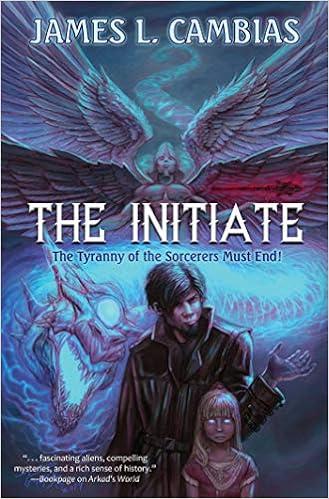
Now, one can write any number of 'blog posts about this, but I decided to take the next step. I wrote a novel about a secret society of wizards in the modern world — and how they're a bunch of selfish jerks and psychopaths. My "Apkallu" wizards conceal themselves from the ordinary folk they disdain as "Subur" simply for the sake of convenience, because it's easier to be parasites on normal human civilization if the normal humans don't know you exist.
If you want to find out what happens when one man turns against the Apkallu, you can read The Initiate when it comes out February 4.


4 responses to “Why The Initiate?”
Bought your EARC from baen and it kept me sane on a plane. Thanks! Write more! Write faster! 😛
Reminds me of some vague memories of the Ars Goetia. One of the things I’ve always wondered about wizards/magic-in-mythology is: Why on earth are the only spirits/beings/etc they manage (or want to) dial so damn unpleasant? If you were some sort of summoner looking for a pen-pal-from-another-universe you’d think you’d want something more than dominance games for offensive power. Sort of tragic: they have this power and this is the best thing they can think of doing with it?
LikeLike
I suppose it’s just the uncuriosity of it that bugs me. Whether or not everyone else “out there” in a hypothetical magic-world is an asshole is something you might not have any control over (though they don’t seem to be looking very hard for anything that won’t gratify their immediate wants, so I’d suspect selection bias.) They aren’t interested in these other beings/places in and of themselves. They have the means to talk with these creatures, (something I’m sure any zoologist would give an eye for wrt animals) and no interest in talking about anything. Not to mention compounding that with their lifespans!
PS: Yes – Harry Potter’s world is just about as self-involved.
LikeLike
You know, that’s an interesting point. I’ve been compiling notes for a sequel and that’s going into the file: why don’t the Apkallu just talk with the spirits and demons they command?
I know one reason for their incuriosity, which The Initiate alludes to a couple of times, but presumably someone would want to find out more.
LikeLike
Could never take the Potter stuff…now know why!
LikeLike